Build a simple daily habit around high-fiber foods that may help lower your LDL—without giving up normal food.
You do not need to become vegan.
You do not need to eliminate every food you enjoy.
And you do not need to completely redesign your life to start making meaningful dietary changes.
This plan helps you focus on something simpler:
Choose one to three high-fiber meals you genuinely like, eat them consistently, and track your progress.
The more often you include foods associated with healthier LDL levels—such as beans, oats, lentils, fruit, chia, flax, and vegetables—the more consistently you give your diet a chance to support lower LDL.
Get Instant Access — $29 reduced to $9
What you get
Your purchase includes two practical resources.
The complete LDL food guide
The guide includes 10 high-fiber anchor meals across breakfast, lunch, dinner, and dessert.
You will get:
- Meal ideas built around beans, lentils, oats, fruit, seeds, and vegetables
- Familiar comfort-food formats
- Simple preparation instructions
- Options for breakfast, lunch, dinner, and dessert
- Convenient and supermarket-friendly ingredients
- Guidance for increasing fiber gradually
- Practical ideas for eating the meals consistently
- Explanations of why the featured ingredients may support healthier LDL levels
- Supporting research and references
The meals are designed to be satisfying—not like punishment food.
Examples include:
- High-fiber cereal bowls
- Creamy fruit-and-seed oat bowls
- Chocolate bean shakes
- Chipotle-style bean bowls
- Lentil pasta bakes
- Chana masala with rice
- Gnocchi with white beans and vegetables
- Chickpea pasta with plant sausage
- Chocolate raspberry nice cream
- Black bean brownies with berries
You do not need to eat all 10 meals.
Instead, choose the one to three meals you enjoy most and make those your regular LDL-supportive meals.
The 14-day anchor-meal tracking sheet
The included tracker helps you establish the habit and notice what changes when you consistently eat your selected meals.
It takes less than five minutes per day and helps you record:
- Whether you ate your chosen anchor meal
- Which meal you ate
- Approximate fiber intake
- Hunger and fullness
- Cravings
- Energy
- Digestion
- Ease of following the plan
You can also record optional weight, waist, and LDL measurements.
How the process works
1. Choose your starting point
If you want to measure your results, consider getting an LDL test before beginning.
Services such as Quest Diagnostics or Labcorp may offer direct-access lipid testing in some locations for approximately $60, although pricing and availability vary.
Follow the testing instructions and consult your healthcare provider, particularly if you have a medical condition or take medication.
2. Choose one to three meals
Review the guide and select meals that you actually like and can realistically repeat.
You might choose:
- An oat bowl for breakfast
- A bean bowl for lunch
- Chickpea pasta for dinner
Or you may choose just one meal.
The plan is not about selecting the “perfect” meal. It is about selecting a meal you can eat consistently.
3. Track the habit for 14 days
Use the tracking sheet each day.
You can continue eating other foods, including normal meals and occasional restaurant food. This is not an all-or-nothing diet.
Personally, I try to keep “cheater” meals to approximately one to three times per week rather than making them a daily habit. The goal is not perfection. The goal is making LDL-supportive foods a dependable part of your overall eating pattern.
4. Retest if appropriate
After two weeks of consistently using your selected meals and the tracking sheet, you may choose to repeat your LDL test and compare the results.
You may begin to see LDL movement within this timeframe, but individual results vary. No specific reduction is promised.
You can also continue the habit and monitor your cholesterol over a longer period with your healthcare provider.
Why these foods?
The meals emphasize foods that have been studied for their potential effects on LDL, including:
- Oats and barley
- Beans and lentils
- Apples and pears
- Berries
- Chia and ground flaxseed
- Whole grains
- Broccoli and leafy greens
Soluble fiber can bind bile acids in the digestive tract. This increases bile acid excretion and may encourage the body to use circulating cholesterol to make more bile acids.
That is one reason high-soluble-fiber foods have been included in dietary approaches designed to support healthier LDL levels.
The food-based principles in this guide were initially influenced by the research summarized in Dr. Janet Brill’s Cholesterol Down, which examines the effects of individual foods and dietary components on cholesterol.
This guide turns those principles into meals you can actually use.
My results—and what I learned
My LDL had previously reached 158.
After medication and broader dietary changes, it fell to 83.
Later, when my LDL was 97, I began consistently including more high-fiber meals built around foods such as oats, beans, fruit, and seeds. During those two weeks, I still ate normal food, including pepperoni pizza, Chinese food, and other meals that would not be considered “perfect.”
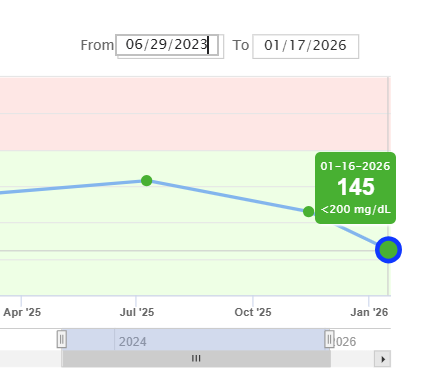
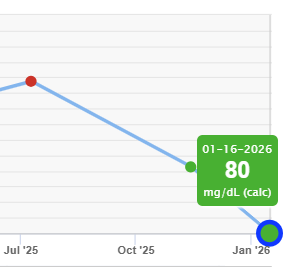
After approximately two weeks, my LDL measured 80, and my total cholesterol measured 145.
My Results:
- Total cholesterol: 166 → 145
- LDL: 97 → 80 (lowest I’ve ever recorded)
I did not achieve that by eliminating every enjoyable food or becoming strictly vegan.
The important change was getting LDL-supportive foods into my routine consistently.
That result is personal experience—not a guarantee. It was influenced by multiple factors, including medication, reduced saturated fat, overall dietary changes, and increased fiber.
But it showed me a practical lesson:
You may not need perfection. You need a repeatable way to include helpful foods every day and a way to track whether the approach is working for you.
What this plan is—and is not
This is a practical food-and-habit guide.
It is designed to help you:
- Eat more soluble fiber
- Add more beans, oats, lentils, fruit, seeds, and vegetables
- Build one to three repeatable meals
- Track your consistency
- Evaluate your own progress
- Create a habit you can continue beyond the initial experiment
It is not:
- A vegan mandate
- A cleanse
- A supplement program
- A rigid meal plan
- A promise of a specific LDL number
- A replacement for prescribed treatment
- A requirement to give up normal food
You do not have to give up the meals you enjoy
The meals use familiar formats because sustainability matters.
You can still have:
- Pasta
- Rice bowls
- Pizza
- Restaurant food
- Desserts
- Foods made with meat or dairy
The goal is to make high-fiber, LDL-supportive foods more frequent—not to demand that every meal be perfect.
Over time, replacing some lower-fiber meals with meals built around beans, oats, lentils, fruit, seeds, and vegetables can improve the overall pattern of your diet.
Who is this for?
This guide may be useful if you want to:
- Support healthier LDL levels through food
- Increase your soluble-fiber intake
- Eat more plant foods without adopting an all-or-nothing diet
- Choose meals you genuinely enjoy
- Build a sustainable daily habit
- Track your results instead of guessing
- Use ordinary supermarket foods
- Avoid relying on expensive supplements
- Make practical changes without giving up normal life
Start with one meal you like
You do not need to follow all 10 meals.
Choose one.
Or choose two or three.
Eat them consistently, track the habit for 14 days, and use your results—along with your healthcare provider’s guidance—to decide what is worth continuing.
How to Eat to Lower Your LDL in 10 Days gives you the meal ideas, practical framework, and tracking sheet to begin.
Get Instant Access — $29 reduced to $9
What you receive today
- The complete high-fiber LDL food guide
- 10 anchor-meal options
- Breakfast, lunch, dinner, and dessert ideas
- Ingredient and preparation guidance
- Fiber-increase strategies
- Food-based explanations and references
- A printable 14-day tracking sheet
- LDL, weight, waist, hunger, digestion, and consistency tracking prompts
One-time payment:
No subscription.
No recurring charge.
No required supplement purchase.
Scott
Leveling Up After Forty
scott@levelingupafterforty.com
Educational content only. Not medical advice. Results vary, and no specific LDL reduction is promised. Consult your healthcare provider for personalized guidance. Do not stop or change prescribed medication without medical supervision. Before-and-after testing should be interpreted with a qualified healthcare professional.